

Sahill Poddar is the Co-Founder and CEO of Parafin, the embedded capital platform behind DoorDash, Jobber, Mindbody. Most recently, Parafin raised a $100M Series C at a $750M valuation, led by Notable Capital, and joined by Ribbit (backer since the seed), Thrive, Redpoint, and Pathlight. Since then, they’ve crossed $100M in revenue and raised >$500M in additional lending capital, including a recent $150M facility led by Goldman Sachs.
Before Parafin, Sahill led machine learning at Robinhood and ran revenue growth at Meta. He’s no stranger to quantitative undertakings — he began his career as a physicist at CERN, where he contributed to the work that discovered the Higgs boson. Thanks to Parafin’s success, Sahill now has a view into dozens of vertical platforms from the inside — an ideal vantage point for pattern-matching what’s working in Vertical AI.
Today’s Episode
In software, channel strategies tend to be most effective once you’ve hit ~$10-15M ARR. You build the product, acquire users, prove unit economics and then consider channels — learn how to sell it yourself before asking others to. Parafin did the opposite. From day one, the company took the embedded route — well before vertical embedded was a thing. With its capital products lively natively inside vertical platforms, it is able to touch hundreds of small businesses that ultimately receive the capital for each channel partner it adds. No consumer brand, no Google Ads, no outbound sales team targeting SMBs.
This is an unusual strategic choice: in early days, it can be expensive and risky. You need large platforms to scale quickly, yet they may hesitate to bet on a startup. Once in, you require partner buy-in to drive adoption amongst end-users. Each subsequent partner’s needs — and user bases — may not mirror the next.
In Sahill’s case, the problem was clear, universal, and non-core enough for its customers that it worked. But the real payoff of the channel-first GTM lies in information asymmetry. Parafin now underwrites across dozens of vertical platforms spanning restaurants, fitness studios, auto shops, home services, and payroll. That cross-platform view reveals patterns about which types of SMBs are healthy and why. And importantly for our episode, along with that comes an understanding of which platforms are building real defensibility and loyalty in their verticals, and which may be exposed to AI disruption that remains in its earliest stages.
The Audacity of a Channel-First GTM
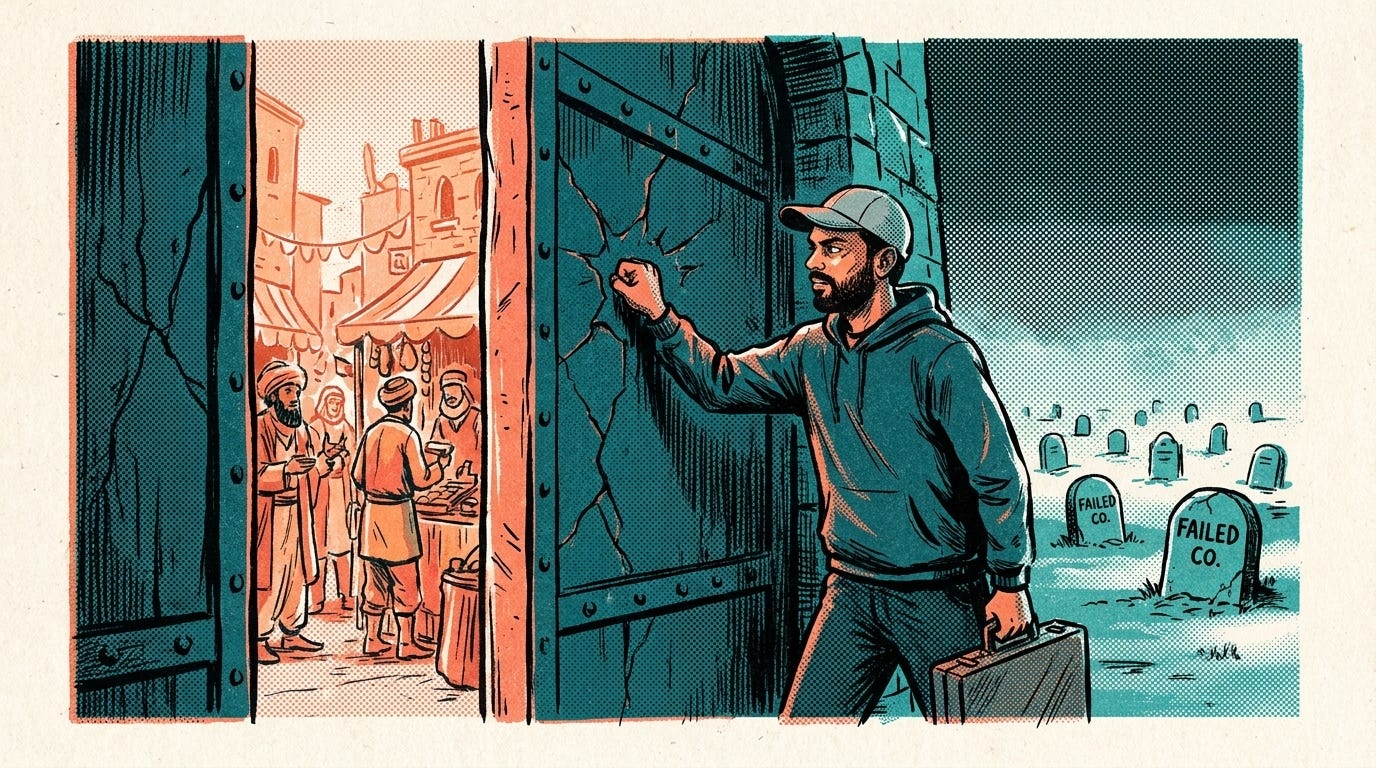
Sahill went after the white whale first: DoorDash. “Everyone’s on the call,” Sahill says about the earliest pitch. The platform’s product, risk, legal, and executive teams all had to say yes. DoorDash was public. Parafin was a seed-stage company.
The reason Sahill was willing to take this harder path because he’d developed a thesis on why direct-to-SMB lending had been a graveyard — Cabbage, OnDeck, BlueVine — to date.
Adverse selection. “You don’t really want to give money to people searching for money,” Sahill says. Pull-based distribution systematically attracts lower-credit borrowers.
Cost of marketing. Paid ads in the lending space are costly, and perform poorly in many verticals.
Commoditization. Every SMB lending competitor underwrites on the same public data, leaving price as the only differentiator, inviting a race to the bottom. There’s always someone willing to cut corners to win on price.
Channel-first would eliminate all three problems at once. For Parafin, customer acquisition cost is zero1 because the platform already owns the merchant relationship. Underwriting runs on proprietary data (real-time transaction volume, retention patterns, seasonal behavior) that no one outside the platform can access. And offers are pushed to merchants based on actual performance, not pulled by the desperate. Parafin has had zero enterprise churn since inception.
The product advantage of true embedding is extreme, especially in lending. Parafin doesn’t just give its partners as referral link to a form, as did Cabbage with Airbnb, and many other SMB lenders before it. The platform-native nature of Parafin’s product enables a different experience: pre-approved offers and 10-second decisioning. By using the platform’s granular transactional data to inform underwriting, they deliver better loan performance and a lower-friction, higher-trust merchant experience. And that matters for channel partners. As we explored in a prior episode — Vertical FinTech, with Rahul Hampole at ServiceTitan — fintech products at the right moment can dramatically expand platform ARPA, NPS, and retention. The better Parafin does, the happier its platform partners.

A personal note
This week, the partner that makes this show possible is also our guest. Parafin has been the presenting sponsor of Verticals since we launched. Working with Sahill and his team has been a lesson in founder foresight, and we are incredibly grateful for their support. We’ve shared many call-outs highlighting Parafin’s success — the revenue & retention they can bring to your platform. But working with a partner on something like lending is just as much about trust and relationship as it is performance. In our experience, Parafin offers a rare combination of both. So whether or not you’re ready for the product today — reach out. They’re a long-term partner who want to see you (and the larger Vertical AI ecosystem) succeed.
Learn more about Parafin today →
What the Best Vertical Platforms Look Like from the Inside
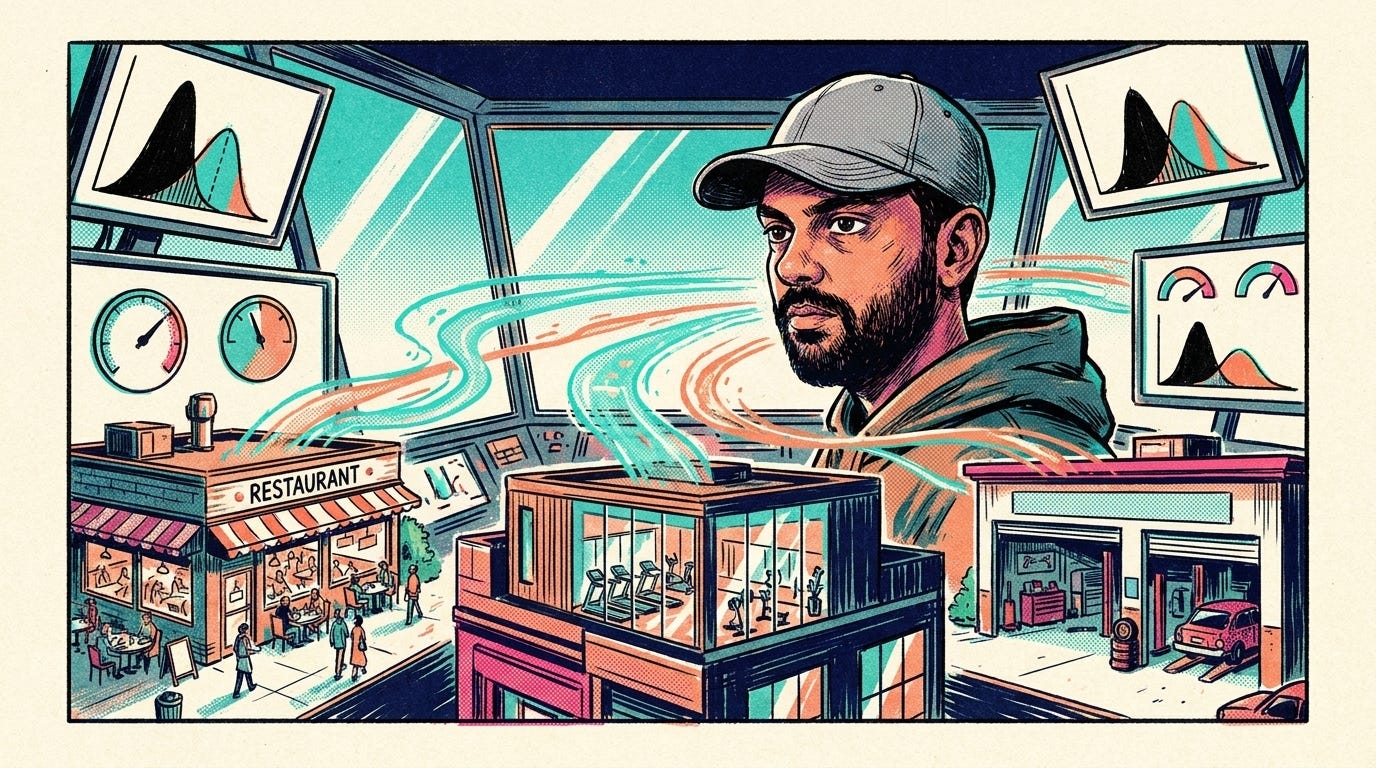
Because Parafin sits inside the financial plumbing of dozens of platforms, Sahill has had an inside view into what works and what doesn’t in the vertical business model.
The best Vertical SaaS are collective bargainers for all their businesses when it comes to negotiating with their vendors for services. And the harder they bargain, the better they get.
The strongest platforms he’s seen don’t just sell software — they aggregate fragmented SMBs into an effective Group Purchasing Organization. They negotiate on behalf of their merchants with payments processors, lenders, insurance providers, and suppliers, then pass those savings through. More merchants means more bargaining leverage, which means better terms, which attracts more merchants. It’s a flywheel purchasing power, a virtual Group Purchasing Organization.
Product-wise, Sahill sees a bimodal distribution of user engagement across the platforms he works with. The majority of merchants either use 1-2 features or 6+. Few in the middle. Lending turns out to be one trigger that can move a merchant from the point-solution cluster to the platform cluster. A restaurant that takes a Parafin advance to buy a second oven starts paying more attention to the platform’s other tools — driving ARPA and retention.
If it’s Written Down, AI Is Coming for It
Sahill has a fairly straightforward view on the positioning of various verticals against model labs.
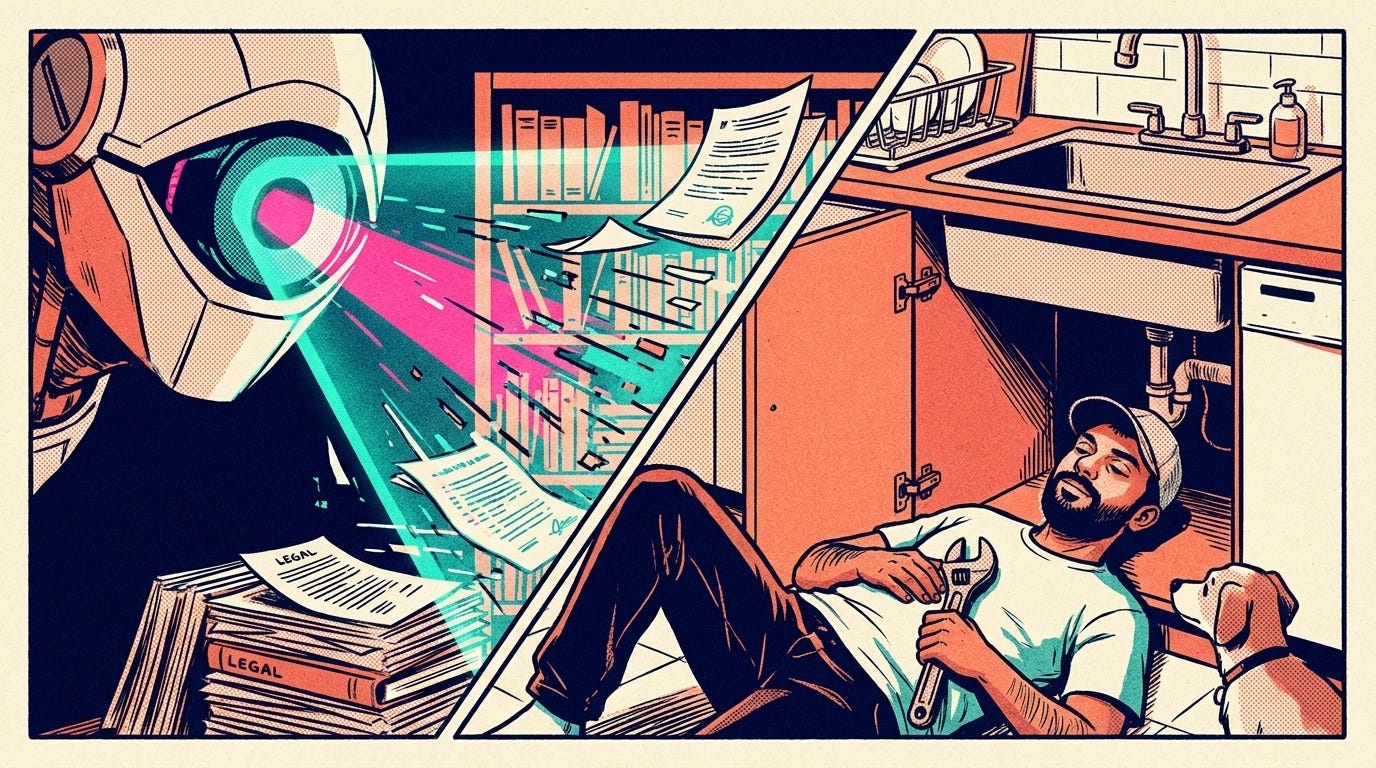
If it’s white-collar, AI is coming for it in a very hard way. But if it’s a platform meant for blue-collar businesses or that industry, it’s very difficult for AI to come for it. [In legal in finance] everything worth knowing is written in some document that AI can read.
The likes of Harvey, Legora, or Norm AI have had a faster path to efficacy precisely because most first-order data in legal and compliance is already digitized. But that availability is a double-edged sword.
Home services, fitness studios, and restaurants are a different story. The critical insights — a plumber’s no-show rate spikes on Fridays, pizza box logistics cost more than the POS system, gym class schedules should shift based on weather patterns — live predominantly in practice, and less so in documents.
Luke visualized a “screen time” heuristic: the fewer minutes per day operators in a vertical spend on a screen, the harder it is for a general-purpose AI to find trainable data. A teacher on MagicSchool might use software 30-60 minutes a day, but the value of the product is powering the 6 hours of non-screen work around it. Jobber’s AI appointment-confirmation bot may seem like a commodity — but the company’s foothold in home services might yield an edge over platforms that don’t understand the specific, predictable moments and reasons trades clients cancel.
Some of the most defensible Vertical AI platforms will access difficult-to-aggregate data — or better yet, create it de novo, as a function of their product. Parafin is leaning into their edge with Paraformer, a proprietary transformer model for time series analysis of SMB cash flows. It powers AI agents for fraud detection, lien checking, and entity verification. As we noted in Payments as a Shadow System of Record, such industry financial layers can become stickier than traditional systems of record because of their access to proprietary information across customers.
Sidebar: The Vertical AI Utility
Parafin is embedded fintech. You might also call it Vertical Infrastructure. What Sahill has built also reminds us of an emerging category we’ve been thinking a lot about lately at Euclid: the Vertical AI Utility. It’s infrastructure that scales with consumption, works whether the platform calls it directly, embeds it, or connects it via an agentic layer. It doesn’t compete with core application layer — it makes such platforms more valuable by doing something the platform can’t (or doesn’t want to) do alone.
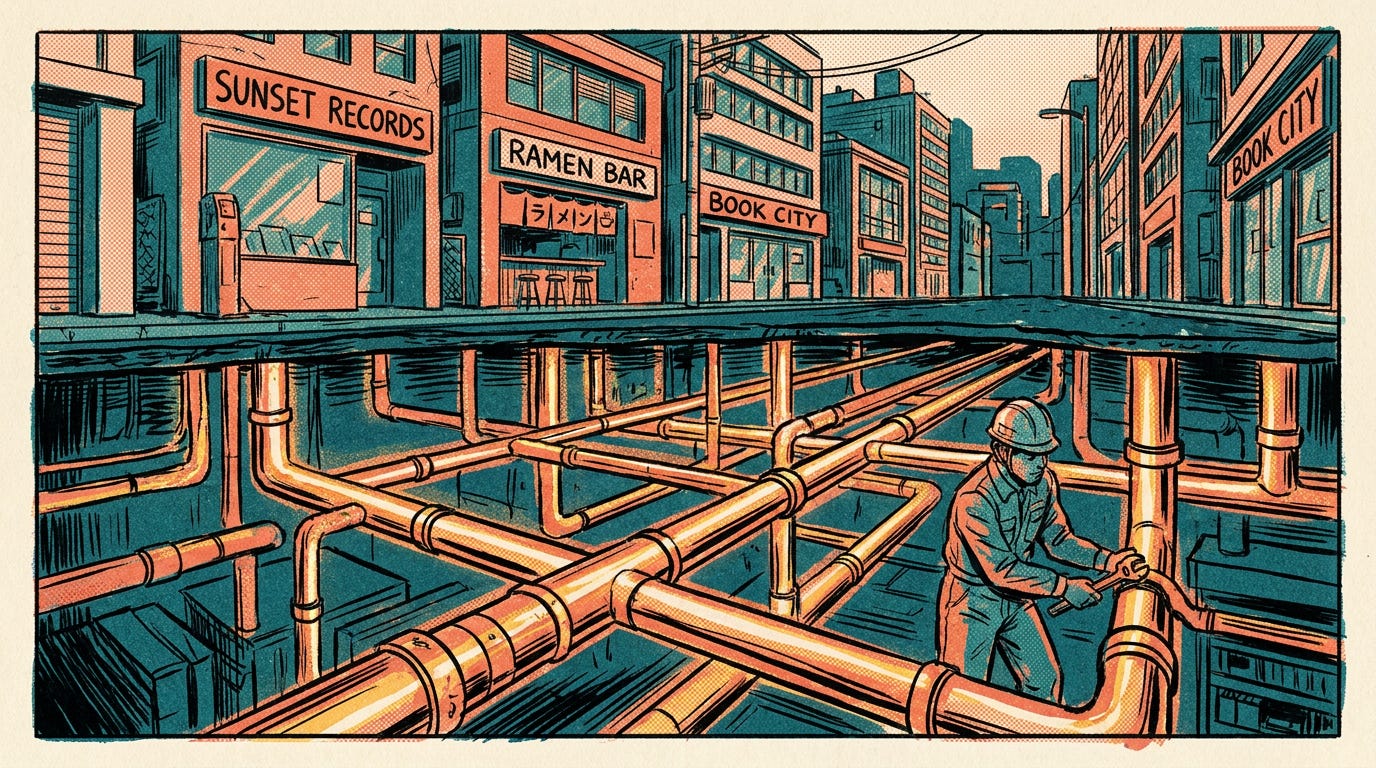
Utilities aren’t glamorous, but they can be difficult to displace once they’re wired in. As the owner of a function few deem their core competency, they often have the breathing room — and data access, across many customers — to compound advantage.
As the likes of Stripe have demonstrated in broader fintech, that may give you a ubiquitous foot-in-the-door to offer adjacent infra as well. We believe that as Vertical AI markets grow, so will the need for such utilities. Many will be relatively industry-agnostic — or perhaps more customer-size-oriented, as is Parafin. Others, perhaps in spaces like manufacturing, healthcare, or finserv — will likely cater on a sector basis. It’s one to watch.
The Takeaway for Vertical Founders
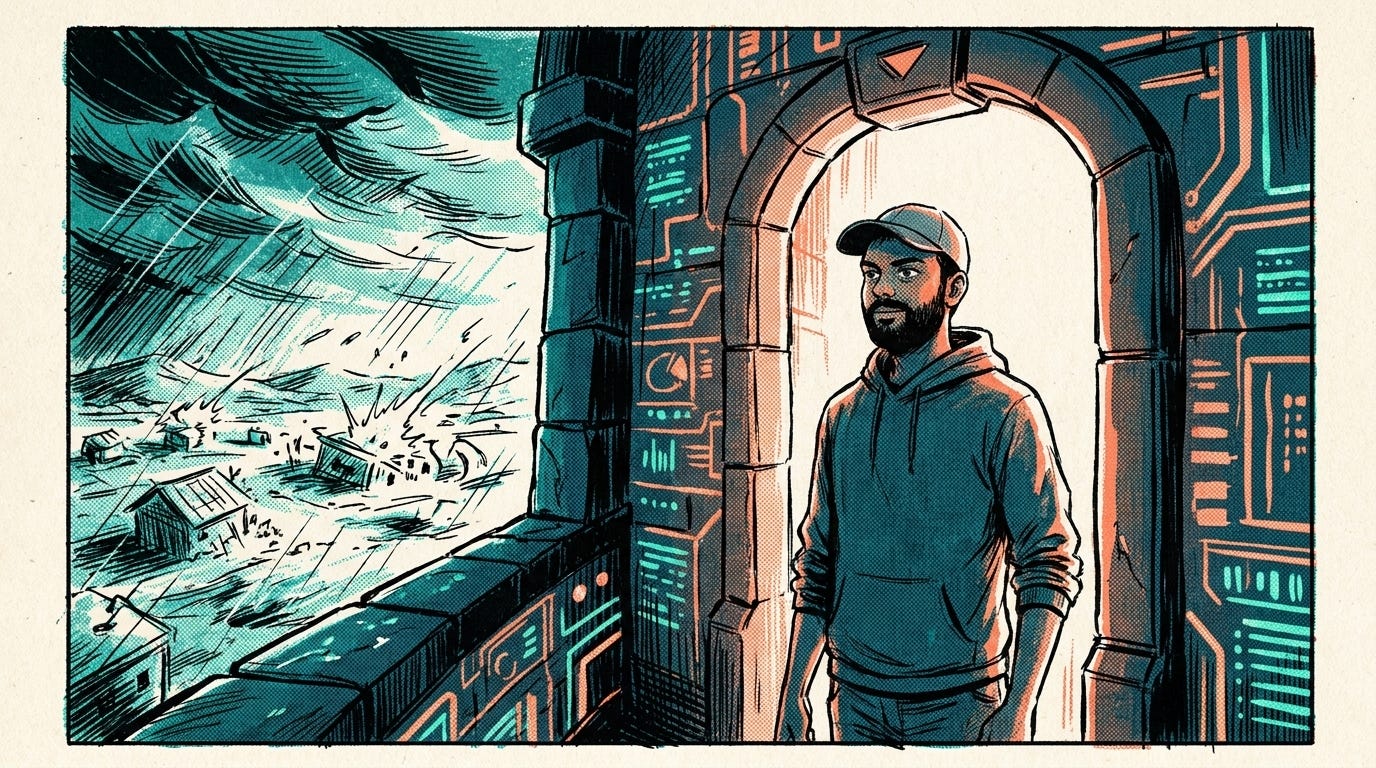
Channel-first can be a cold-start problem from hell. You need a platform to trust you before you have proof; you’re building for someone else’s customer; the integration is deeper; and distribution & feedback runs through an intermediary.
But the compounding advantages are enormous. You inherit the platform’s distribution, trust, and — perhaps most importantly — data. These layers of stickiness have never been more important than now, in the era of Vertical AI. As Sahill put it, “if your platform is predominantly just UI and database and that’s all you got, yeah, it’s probably gonna be a tough road.”
Increasingly, defensibility comes from things you and you alone have earned the right to learn.
See you next week.
Key Moments from this Episode
00:00 — What separates the best Vertical SaaS companies
04:56 — Why direct SMB lending became a Silicon Valley graveyard
11:16 — How a five-person startup landed DoorDash
18:10 — Why you should sell the minimum viable product
20:51 — What the data says about winning Vertical SaaS companies
26:45 — How Parafin actually underwrites small businesses
34:31 — Why AI needs to take action, not just provide insights
40:08 — Could AI turn every SaaS product into a database?
48:58 — The vertical software companies AI will struggle to replace
54:06 — Sahill’s favorite verticals from 2026
Subscribe to Verticals
…to get new episodes every week, available wherever you watch or listen:
Not completely, as there are obviously GTM costs in acquiring the channel partners themselves. But it’s accurate in the traditional sense of the word: the CAC for a marginal SMB borrower.
Your content is very useful to me. Thanks for the work you guys are doing.
In my world (LNG/Refineries/Power), I’ve done exactly what you’ve described- AI utility infrastructure.
Incumbents have digitized workflows for “blue collar” work. They adapted a System of Record workflow for field operations. This does not prevent catastrophic incidents like Freeport LNG’s 2022 explosion or three mile island nuclear incident.
I’ve analogized a process plant to a human body. Left hand represents the SCADA/DCS (control system). Its input variables are sensed from field transmitters, analyzers and I/O devices. These are the nerve endings of the left hand.
The right hand, which represents the manual “blue collar” (BC) workflows, has no feedback/nerve endings. Every workflow here, requires a digital or paper signature. This is an assumption that work was done as designed. In our world, this has been termed-Work as Imagined vs Work as done. I’ve named this The execution gap. It’s where 70% of industrial accidents occur.
Our process utilizes a field verification of work process. It prevents mistakes in realtime, automates auditability and presents useful behavioral insights especially where worker retraining is required.
We are calling this data exhaust, a Record of Execution (RoE).
Compounding this, think of the right hand catching a ball, the fingers not only need the nerve endings but, they also require muscle memory and inter-finger coordination.
Similarly, these BC workflows currently has no coordination neither does it have muscle memory.
Even more importantly, the facility “process being”, has no “brain”. It depends on expert humans to analyze, remember and interpret data. More than half of that data is assumed or taken as word of mouth. Humans retire, forget or leave. This is why we really don’t learn from past mistakes and most industrial accidents are repeated.
Thanks for sharing.