

Anthropic or OpenAI just launched a product, inked a partnership, or made a senior hire in my industry. Should we be worried? It’s a natural and increasingly common question we hear from founders. The instinct is to treat every lab release as a threat and start building walls. Our guest today argues that’s backwards. He thinks the most durable Vertical AI companies embrace frontier progress — building so every release improves not only their product, but also their moat.
The Takeaway
Frontier models will continue to improve — don’t bet against it.
Autopilot > copilot. Vertical AI that does the job end-to-end gains from improving models, while building edge beyond the tokens.
Don’t marry one model. Model routing to optimize a specific workflow is an edge. Long-term, model mixes and open-weights can recapture margin.
Let the labs supply the intelligence and own what they won’t: a compounding data loop, private data, corner cases, and last-mile liability.
Earn data the way Tesla did: with a primary product customers pay for. Learn what labs can’t by doing work previously done by humans.
The Episode
Keith Rabois is a Managing Director at Khosla Ventures. He’s backed Vertical AI companies including Rogo (banking), Spellbook (corporate law), and Comp (HR). He was an executive at PayPal and LinkedIn, COO of Square, and co-founded Opendoor. As a GP at Founders Fund he led Ramp’s 2019 seed round, and he has been on its board since. He’ll share why the Vertical AI companies he backs are betting on the models getting better, not stalling; why he has completely changed his mind on enterprise vs. SMB; and how Vertical AI remains an incredible opportunity if done right.
Keep Your Friends Close and Your Models Closer
The reality is much more nuanced than “they’re coming for the AI app layer!” But it’s easy to feel this way, especially when public markets catch a cold every time the labs sneeze. And, to be fair, there is real precedent for labs getting sharp elbows with apps deemed competitive — after SpaceX closed its $60B acquisition of Cursor, OpenAI said it would wind down Cursor’s access to its models. The prospect of your supplier becoming your competitor is uncomfortable. Thinking about how to build walls is only natural.
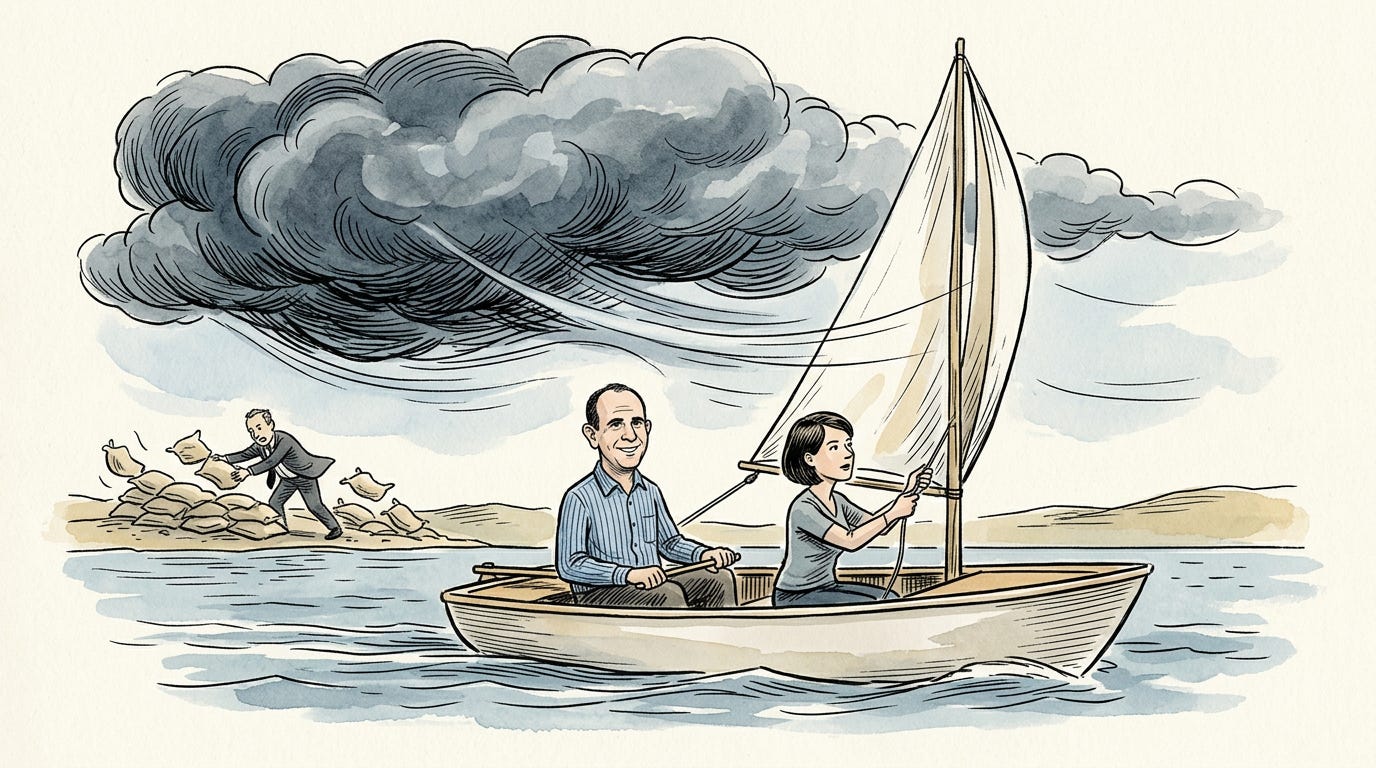
Keith’s view is that the walls are the wrong bet. Betting against leading models while building on top of them, he posits, is a naive strategy. What he looks for is a company “embracing what frontier models can do and channeling that into a vertical application where the customer gets increasing value.” That begs the question: what does this value compounding look like, and how early does it have to happen?
As Luke observed, most of the true Vertical AI breakouts to date started as “industry GPTs.” The ChatGPT-for-X products sold to lawyers, bankers, doctors, teachers, and accountants — Legora, Rogo, OpenEvidence, MagicSchool, etc. Keith broadly agreed, but emphasized that early growth doesn’t always mean lasting defensibility. Which is why Khosla starts with the end in mind, rather than the wedge: “what could this be in, let’s say, 2030.” Working backwards, “is this gonna be a sustainable, independent, successful company in 2030?”
We went deeper on Cursor as an example. Keith called the SpaceX deal “a heroic acquisition” — but thinks Cursor’s future as an independent company was “pretty bleak.” It had the talent and a data loop most AI companies would kill for. At one point it reportedly accounted for as much as half of Anthropic’s revenue. Building on the labs initially, we all agreed, wasn’t the mistake. Nor was going for their own models. Cursor shipped Composer and then Composer 2, post-trained on an open-weight base (the route we covered in The Open-Weight Unbundling). Composer was gaining real ground in the lead-up to the acquisition. Keith’s view is that it didn’t invest “enough, fast enough, deeply enough,” and that catching up with the labs head-on would by then have cost something like $1B. Had it started earlier, “that price tag might not have been as crazy.” Cursor was vulnerable to lab competition from the get-go, coding being their natural domain and by far the most suitable use case for LLMs (more on this in Nic’s recent LinkedIn breakdown). But $60B made the call a bit easier.
The fast growers in Vertical AI seem to be following suit. Harvey built its own legal model, Tenet, on an open-weight base, rather than relying only on the labs’ general models. Keith is seeing Rogo, a Khosla company, moving in that direction with its Felix agent, which handles work well beyond the GPT interface for — by Keith’s count — 29 of the top 30 investment banks today.1
Autopilot > Copilot
Keith shared a simple framework for how Vertical AI companies should think about defensible product. Those that “move more towards autopilot [are] probably more defensible and more durable long term than those who are kinda co-piloting.”
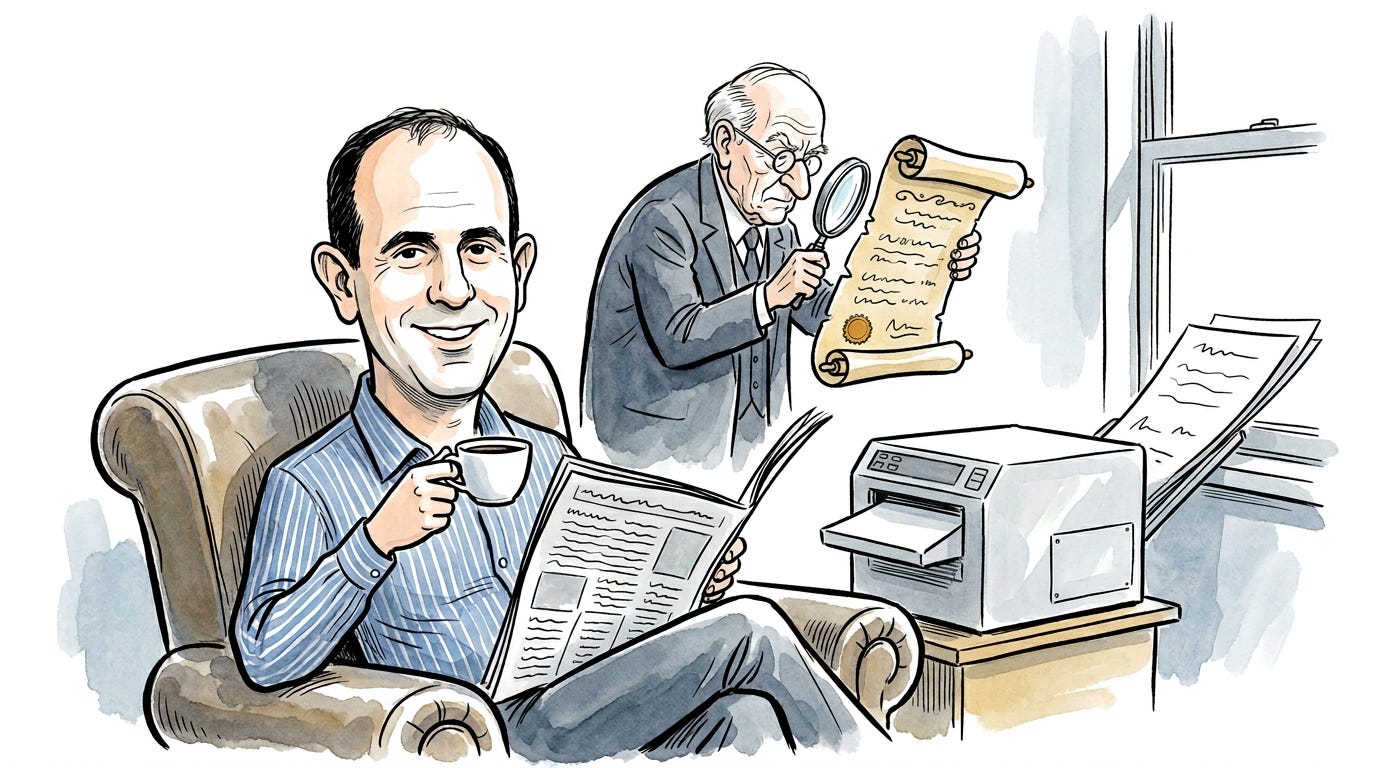
A copilot sits next to a professional and makes them faster. The issue is that every model upgrade also makes the base model a better copilot — risking that the gap between you and a general chatbot with a good prompt narrows. An autopilot owns the outcome. Every upgrade makes the product better, cheaper or both, and the customer buys the result rather than the tool. Which generally, they’re willing to pay much more for, pricing it very differently than a SaaS seat they have to learn and use. Of course, sometimes a co-pilot might be the path to an autopilot or open up other modes of defensibility (e.g. most of the breakout “industry GPTs” we mentioned earlier). But most of those also began years ago, when core models were less innately capable.
Spellbook, where Khosla led the Series B last year, is Keith’s example of the autopilot bet in law. Its pitch is autonomous contracting, on the premise that “there’s no reason 90 some odd percent of contracts in the United States require a human lawyer.” His analogy was the SAFE. Before YC standardized it, a seed round meant sophisticated counsel on both sides and a legal bill of maybe $5K–$20K to raise $500K. Now almost every seed round runs on some version of a SAFE, because, as YC saw it, “99% of seed investments can be done with like a few bullet points.” Most contracts look like that. A single New York Knicks game takes some 2,000 contracts, Keith said, and only a handful are truly bespoke. Spellbook, he said, saved one Fortune 100 customer $21M in outside counsel fees over three years, by the customer’s own estimate (the name hasn’t been released yet).
Keith uses autonomous driving as an example. “AI is excellent in the middle of bell curve distributions.” A human may handle a never-before-seen road better, but on most roads the machine already wins: Waymo’s latest data shows 82% fewer injury crashes than human drivers over 270M+ rider-only miles. The tails still deserve a human, and should be priced like it — but the middle of the distribution, naturally, is where the volume of work lives.
Working with the models doesn’t have to mean picking one. Keith pointed to what some call jagged intelligence: various models lead on different tasks. “If you’re gonna write [an] autobiography, there might be a better product to use than if you were gonna write poetry.” The debate rages over whether capabilities ultimately converge on one or two models — but in the meantime, he surmises vertical harnesses may have a long way to run for complex workflows.
What the Labs Won’t Touch
Even if you’re working with the models, you still need to own something outside of them. You need an edge, which outside of physical-world touchpoints and network effects, likely means some sort of data moat. Ultimately, that may also mean building your own model. Keith laid out four things he believes a lab is unlikely to replicate soon:
1. A loop that compounds
If your product generates data the way Cursor’s did, and you run that loop “extraordinarily well, it’s really hard for someone coming from ground to catch up ’cause you’re just growing faster, faster, faster.” The caveat is diminishing returns. In self-driving there’s no ceiling, with endless roads and conditions. In coding, maybe there is, which would let a second or third player catch up.
2. Data that’s public but not accessible
This is the one founders underrate. State Affairs, another company Keith mentioned, tracks state legislation and hearings for large companies. People assume that data is freely available because it’s government activity. “The truth is, it’s public but not accessible, which is a difference.” In some states, Wisconsin among them by Keith’s account, if nobody attends the hearing, there’s no online record of it. A model trained on the internet can’t learn what never made it onto the internet. Rogo has a version of the same edge, since much of what bankers rely on isn’t in the public domain.
3. Corner cases, sliced thin
Contracts aren’t one dataset. An NBA contract works differently from a consumer packaged goods contract, and putting a rocket into space can take hundreds to thousands of agreements on its own. “I think you need to cut, cut, cut the data and slice it, to have enough data.” The finer the slicing, the less a general model’s breadth helps, and the more a vertical player’s depth does.
4. The last mile
In law, medicine and accounting, being right isn’t the whole product. Someone has to stand behind the answer, with the license and the malpractice exposure that come with it. “Getting ninety-nine percent of the way there may not be the same product as the full solution.” Keith thinks accounting has all of these dimensions at once. Closing the books is tractable enough that a frontier lab with context could arguably do it. An audit, by definition, requires a third party with the right status. And with tax, you “kind of have this noose around your neck if you’re wrong.” Khosla has backed both sides of that split: Basis, which Keith says sells to most of the top 150 accounting firms and makes closing the books “automagical,” and an AI-native accounting firm, built partly on Basis, that holds the licenses to do tax and audit itself.
The same logic explains Keith’s enthusiasm for Comp, which uses AI to replace the work of HR departments, starting with large companies in Brazil like Nubank before a US launch. If you only automate “a sliver,” you may be “a little bit more dependent on the frontier labs than you wanna be.” If you replace the whole function, “there’s no way Anthropic’s, like, replacing HR departments.” (We’ve been more cautious on the margins of full-service models where white-glove client service and human trust are key elements of the value prop (as we discussed in The Siren Song of Services), but the liability point holds.)
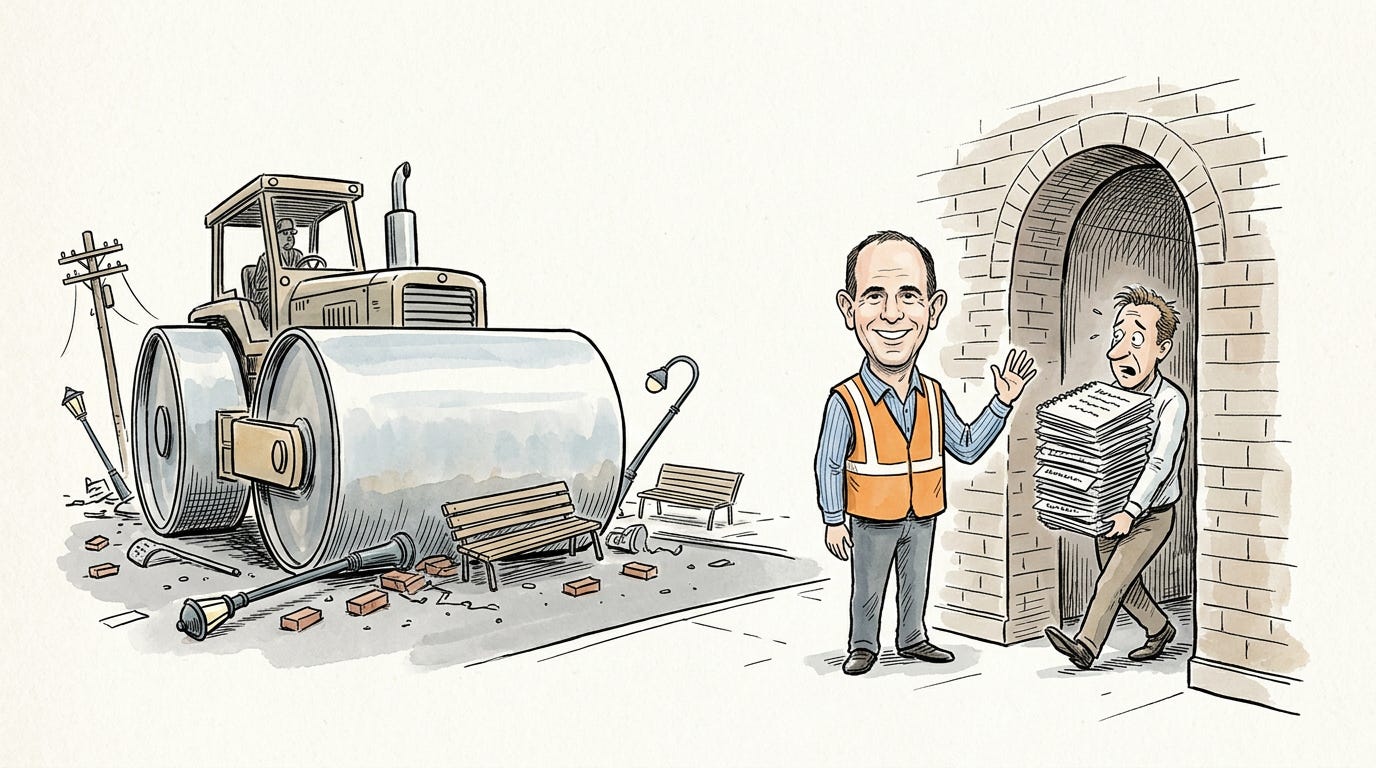
How do you get the data in the first place? Keith’s answer was Tesla versus Waymo. Waymo had Google’s balance sheet and could map roads for years at a loss. Tesla built a car people wanted to buy, then used every car on the road to collect data at effectively no marginal cost. “I think most startups need to follow Tesla’s playbook. They can’t really follow Google’s playbook.” The alternative is to be one of the very few founders who can raise hundreds of millions in one shot, which depends on both your credibility and a market willing to fund it. Keith thinks that market is fragile. If Anthropic’s IPO stumbles on timing or valuation, “even a blip for them will be felt as an earthquake for everybody else” — and the disappearance of $100M seeds may be the least of the VC world’s problems.
The Stark Shift to Top-Down GTM
Over the last few years, Keith has completely changed his mind on one critical consideration for would-be Vertical AI founders: enterprise vs. SMB. Nic asked him whether he still champions his well-known view from about a decade ago that the best startups target fragmented SMB markets with low NPS. “No, I’ve changed my view completely,” Keith responded. He’d avoided enterprise because he’d never sold to it — PayPal and Square scaled on product and marketing, not AEs. But the state of play has shifted.
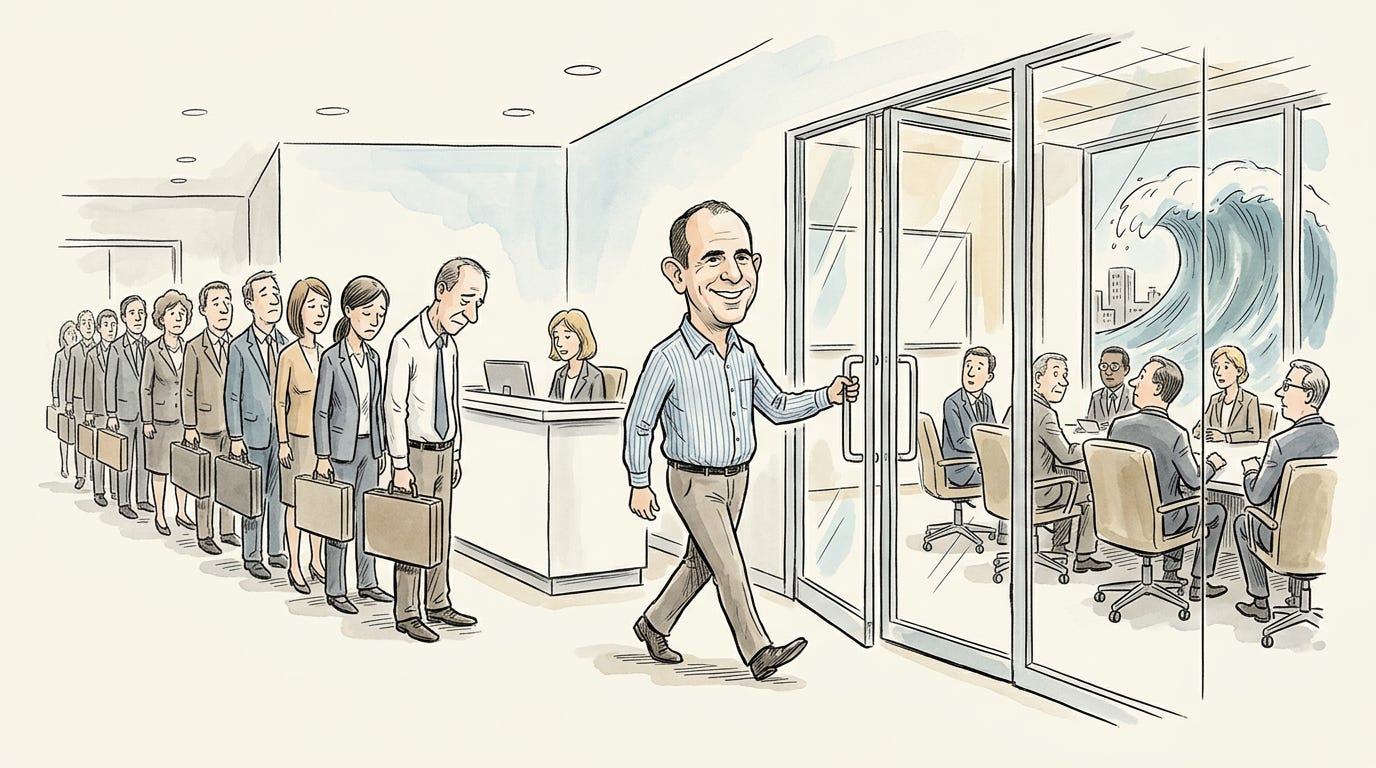
The current moment in AI has seen top-down, enterprise strategies flourish, even for early-stage startups. The archetype: a founder sells to the CEO or someone one level below, sometimes with an initial sweetheart deal, and a promise to be their AI partner. No AE needed. Pairing that with brand marketing, they achieve far bigger ACVs, far faster than SaaS ever could. Keith, a former lawyer, finds it “absolutely amusing” that legal AI may be the hottest theme of 2026, with Harvey’s benchmarks and the fights between Harvey and Legora playing out in public. The classic AE-cohort playbook isn’t dead — Keith invested in Profound, which follows a more traditional motion to great success. But for founders with the access, credibility, and tenacity to hunt an industry’s whales early, the rewards are hard to turn down.
Likely, it’s a knock-on effect of the speed with which LLMs have evolved. Top-down works because every CEO and board is asking how to adopt AI… or how AI threatens them. At Euclid, we’ve never seen a moment where multi-million-dollar enterprise deals are being won with this frequency by seed-stage companies. This may be a temporal opportunity, grounded in AI FOMO and FOD. Whether it lasts a year or ten is hard to say. Once the wave crests and companies feel they’ve placed their bets, however, the window probably narrows. Brands established in the meantime — Keith wagers and we agree — should last longer.
Growth Is Still the Point
None of this makes Keith skeptical of growth. In the rapid-fire round he was “pretty bearish” on AI rollups for exactly that reason: “More business fundamental value is created on growth than cost reduction.” Most rollup pitches he hears use AI to strip costs out of acquired businesses, which improves cash flow, but enterprise value comes from “unusual growth stories.” His example was Ramp, which he said has accelerated growth seven quarters in a row at over 100% annualized. Ramp announced this month that it’s past $2B in annualized revenue at a $60B valuation, and cash-flow positive. When Keith last checked, about six months ago, the only public stock growing over 100% at breakeven or better was Nvidia. A rollup built on AI-driven growth, with evidence it works, would interest him more, “but that’s not 90% of what I hear.” (For our original take on AI rollups, see The AI-First Roll-Up.)
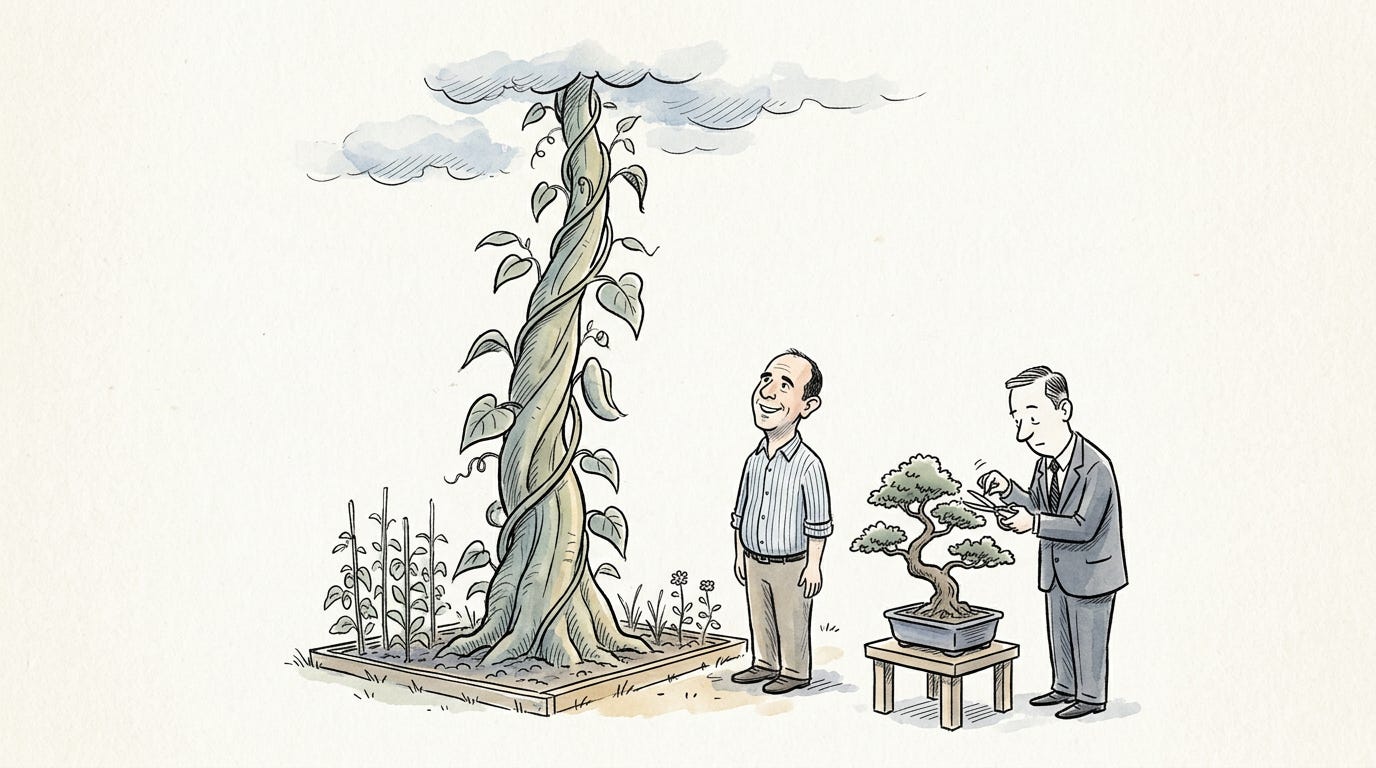
He’s also “pretty bearish” on Vertical SaaS incumbents like Toast and ServiceTitan, while allowing that the market may have over-rotated at first. His analogy was mobile. A few web-era companies made the jump, but look at your home screen and few of those apps came from what we used to call internet companies. We’d hedge that more than Keith does. Toast just grew revenue 23% at a 26% GAAP operating margin, and ServiceTitan’s net dollar retention is still above 110%, even after its stock fell about 30% in a day in September on its AI transition. Incumbents with payments, hardware and a system of record have more to defend with than most web-era companies did (a question we dug into in Which Vertical Incumbents Will Survive AI?). And the web incumbents that did survive mobile often did it by buying the natives, as Facebook did with Instagram and WhatsApp.
So the question is which growth compounds. Growth that deepens a data loop, reaches data nobody else can, or takes on liability for the outcome builds something a frontier lab can’t easily own. To our Tesla analogy, however, Vertical AI businesses may have to access that data with another wedge — which makes initial distribution, however you can get it, critical.
The Takeaway
When the model labs release their next frontier families, does that make your product better, or redundant? Keith’s answer is to build for the former: bet on the models improving, use the best of them for each task, and point the product at doing the whole job rather than assisting with it.

As a Vertical AI founder, you should let the labs supply the intelligence and own what they won’t: a loop that compounds, data that’s public but not accessible, corner cases sliced finer than a lab will bother with, or the liability for the last mile. Industry network effects, which we wrote about in You Can’t Vibe-Code a Network, are a fifth. Ask yourself what the next model release does to your product — if it narrows the gap between you and a general chatbot, push toward autopilot. Leverage the top-down sales window while it’s open; don’t underestimate brand and physical executive presence. Run fast on distribution — even if it’s on the back of the labs and AI FOMO — but always keep the 2030 vision in mind.
See you next week.
Key Moments from this Episode
00:00 — Keith Rabois on the future of vertical AI
05:03 — How AI saved $21M in legal fees
08:03 — Why Rogo is winning in investment banking
09:53 — Can vertical AI survive the frontier labs?
15:30 — Why AI could automate entire departments
19:00 — Why fast growth doesn't guarantee survival
25:10 — Why Keith changed his mind on enterprise investing
28:06 — The new AI go-to-market playbook
33:34 — Are AI startup valuations becoming unsustainable?
36:44 — How Keith thinks about market size and venture returns
38:50 — Why ownership still matters in venture capital
40:50 — Why Keith is bearish on AI roll-ups
42:00 — Why legacy vertical SaaS is in trouble
45:10 — Keith's prediction for the future of podcasts
Rogo’s own materials say it’s live at 7 of the top 8.