

Yoni Rechtman is a Partner at Slow Ventures, a generalist seed and pre-seed fund managing over $1B in assets. Yoni joined Slow from Tusk Ventures, where he spent five years investing in regulated industries. Slow has become well known for backing novel startup business structures: they seeded Metropolis, which acquired its way into the parking industry and is now a $5B physical AI company; they backed Phoebe, a three-sided agent network for home care; and they led Ando’s $4M seed round in restaurant staffing AI. Yoni also writes 99% Derisible and is behind many of Slow’s popular decks on rollups and growth buyouts. In this episode, Yoni gives us a preview of his next deck: a five-part taxonomy for the future business models that work in an era when software can become so much more than it once was.
Today’s Episode
Most people, most of the time, want to buy outcomes, not workflow, not dashboards, not a nicer way to do the thing they didn’t want to do in the first place.
This is not a new observation, but the math behind it has changed. Software has historically captured 1–3% of a business’s revenue. Services capture the rest. That ratio exists not because businesses love paying consultants, but because software couldn’t actually do the work. It could only orchestrate it. The best software businesses in the world (Google, Visa, Uber, Facebook) are the exceptions: network effects businesses that sell outcomes rather than workflow. Everyone else sold a hammer and hoped the customer would swing it.
AI changes the physics. Software can now deliver the hammered nail, or the whole cabinet. The markets get 30–100x bigger. But the business models that got us here (high gross margin, passive retention, amortized R&D over long product cycles) break down along basically every line of the income statement. What replaces them is the subject of this episode.
Selling the Cabinet, Not the Hammer

Yoni’s starting claim is blunt: “No one has ever woken up and said, I want to buy workflow software.” And the data backs him up. A normal business spends 1–3% of revenue on software. If it’s only 1% on software, it’s 99% on everything else. The opportunity is capturing a share of the 99%.
Forward-deployed engineering (FDE) is the first model that does this. Instead of selling a product and training the customer to use it, you take responsibility for the outcome. “Rather than saying you change your business process around my software,” Yoni puts it, “I’m going to change my software around your business process, and I’m going to guarantee that it’s going to do that.”
The practical result: you stop selling through a software line item and start selling through a transformation line item. Enterprises right now want to buy AI transformation. If you show up with experts and own the implementation, you’re part of their future-proofing story. If you show up with a web app, you’re competing with every other web app on features.
The trade-off is obvious. FDE businesses have heavier delivery costs and harder scaling curves. But they can charge dramatically more, ACVs of $500K instead of $50K, because they’re getting closer to what the buyer actually wants: “the thing doing what I said it’s going to do.” As we explored in Service-Level Disagreement, the strategic question is whether you can graduate from the wedge to something with software-like defensibility before the arbitrage window closes.

A quick word from our sponsor, Parafin. Now past $100M in revenue and backed by a Goldman Sachs-led credit facility, Parafin powers embedded lending, cards, and insurance for vertical platforms like DoorDash, Jobber, and TikTok Shop. Purpose-built for platforms serving SMBs, no infrastructure required. Explore a custom program for your platform today →
Five Shapes of Post-SaaS Software
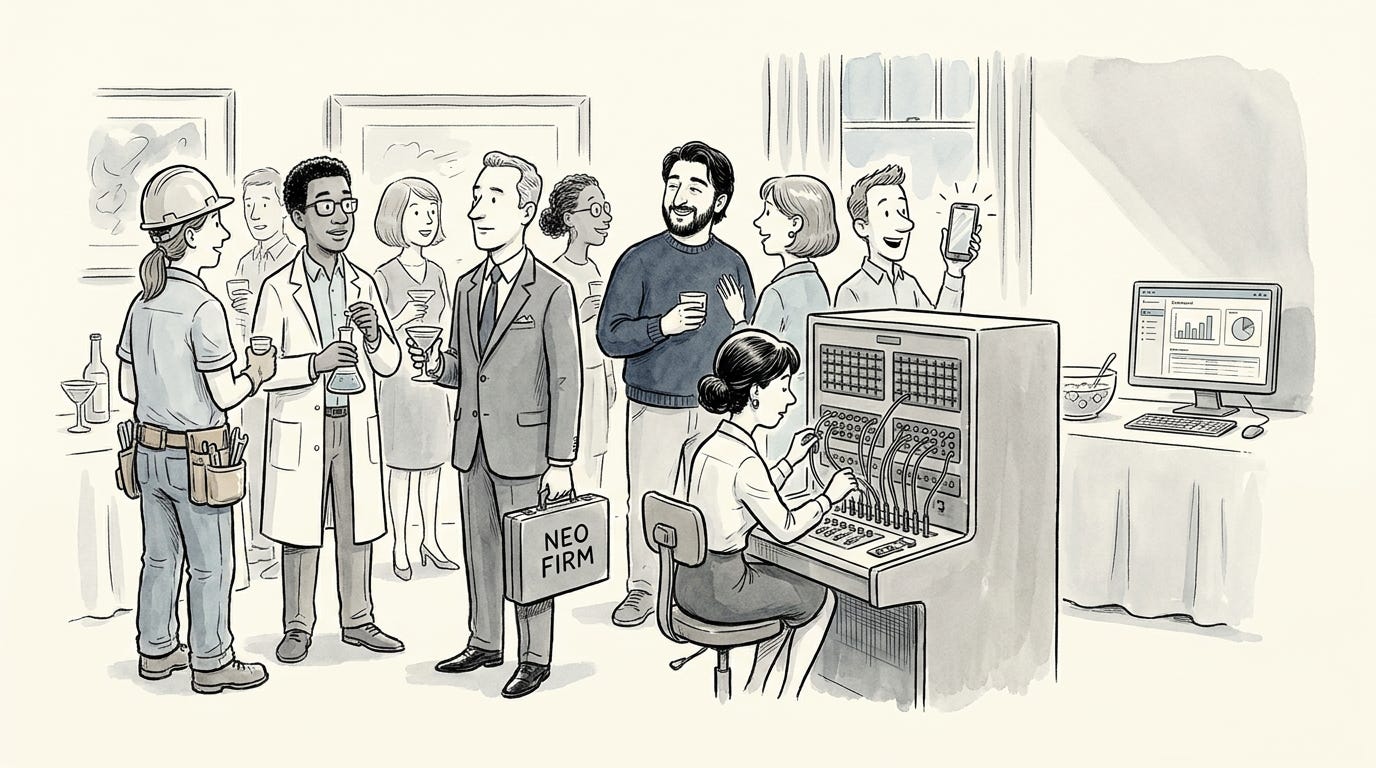
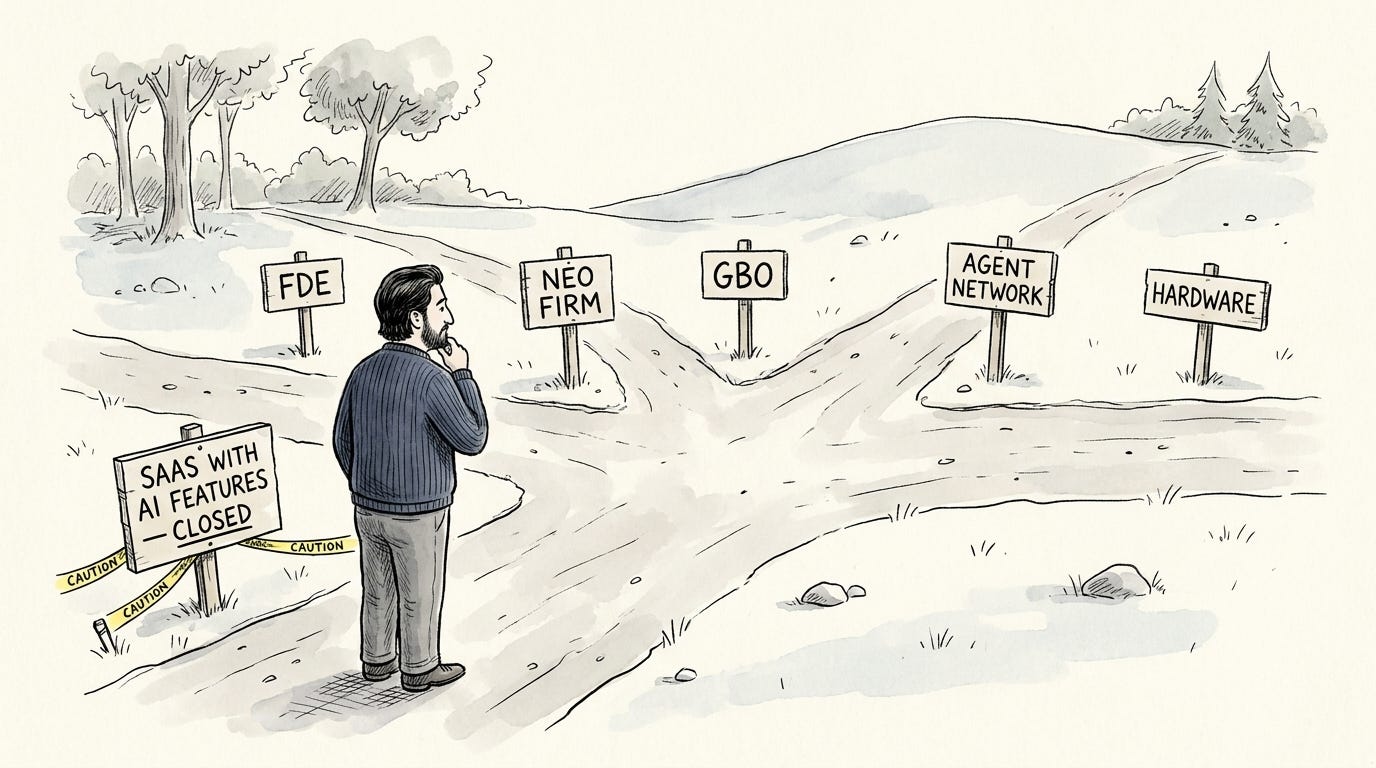
Yoni has been working on a deck, forthcoming by the time this publishes, that lays out five business models he thinks actually produce durable value for software companies going forward. The taxonomy:
1. Forward-Deployed
Services to differentiate software. Own the outcome, own the implementation. Palantir’s cultural shadow is long here for a reason. You decommodify the buyer experience by making promises and delivering on them, which is what software historically fails to do.
2. Neo Firms
Software to differentiate a service. Build a new kind of professional services firm where AI is the operating system, not a feature. The comparison Yoni draws is sharp: Crosby, which uses software internally to deliver legal services and owns the output, versus Harvey, which post-trains a model and presents it in a UI. “I feel much more confident that Crosby has value add above its inference,” he says, “and that’s unquestionable to me.” The dividing line is ownership: who is responsible for the work? If you own the liability and the outcome, you’re a different kind of company than if you’re reselling better prompts.
3. AI Rollups
Or other inorganic strategies, like growth buyouts. Instead of selling software to an operating business, buy the business and build software into its DNA. This is Slow’s signature thesis. Metropolis seeded in 2019, acquired Premier Parking (600 garages), then SP Plus ($1.5B), and now runs AI-powered checkout-free parking across thousands of locations at a $5B valuation. Vertical SaaS captures 1–3% of TAM. Owning the business captures 100% of the value software creates. As we noted in The Siren Song of Services, the math on capturing more of a customer’s spend at lower margins can be dramatically better than capturing a sliver at 80% gross margin, provided you have the operational DNA to execute.
4. Agent Networks
More on this below. It’s the one Yoni is most excited about and the one worth examining in detail.
5. Hardware-First
Hardware to differentiate software. Apple is the canonical example. The software is fine. It works because the hardware is extraordinary.
The conspicuous absence: plain SaaS with AI features. Yoni is bearish. “Replicating features is fairly easy,” he says. If your value prop is a better prompt between the foundation model and the user, you’re making a bet against foundation model progress. That’s been a losing trade for four years.
Deep Dive: Agent Networks

The most novel piece of Yoni’s framework, and the one with the clearest connection to what we’ve been writing about in The Dark Marketplace, is agent networks. The playbook goes like this:
Start in single-player mode.
Do real work for a customer: fill shifts, schedule caregivers, manage invoices. Charge for it.
Use that single-player utility to acquire a large population of customers on one side of a transaction.
Then layer on multiplayer, network effects that emerge from the connections between those customers.
The contrast with the last generation of marketplace businesses is instructive. Uber spent billions to overcome the cold-start problem, subsidizing rides, paying drivers to sign up. The agent network playbook inverts this: you get paid to solve the cold-start problem. Your single-player product generates revenue while simultaneously building the supply or demand side of a network.
Phoebe, a Slow portfolio company, illustrates the mechanics. They do labor orchestration for home care agencies, a scheduler agent that assigns shifts. In doing that work, they acquire all of the talent each agency manages. The next move is a talent agent that represents those caregivers across multiple agencies, then a family-facing agent that helps households find and manage care. Three sides, one network, and each new side feeds the others. Ando does something analogous in restaurant staffing: forecast demand, fill shifts, build an identity passport for workers that travels with them across employers.
Yoni distinguishes this from the 2019-era “come for the tool, stay for the network” playbook, which mostly didn’t work. “There was not a substantial underlying platform shift driving change,” he says. “It was basically just people borrowing from two different business models and mashing them together.” AngelList and HoneyBook are fine businesses. They didn’t produce the network effects their models promised because there was no new capability underneath. Just two models stapled together.
Agents provide the missing capability. A tool that can actually do work, not present a workflow for a human to operate, creates genuine single-player value worth paying for. And that means you can charge for customer acquisition rather than subsidize it.
The Data Moat Debate
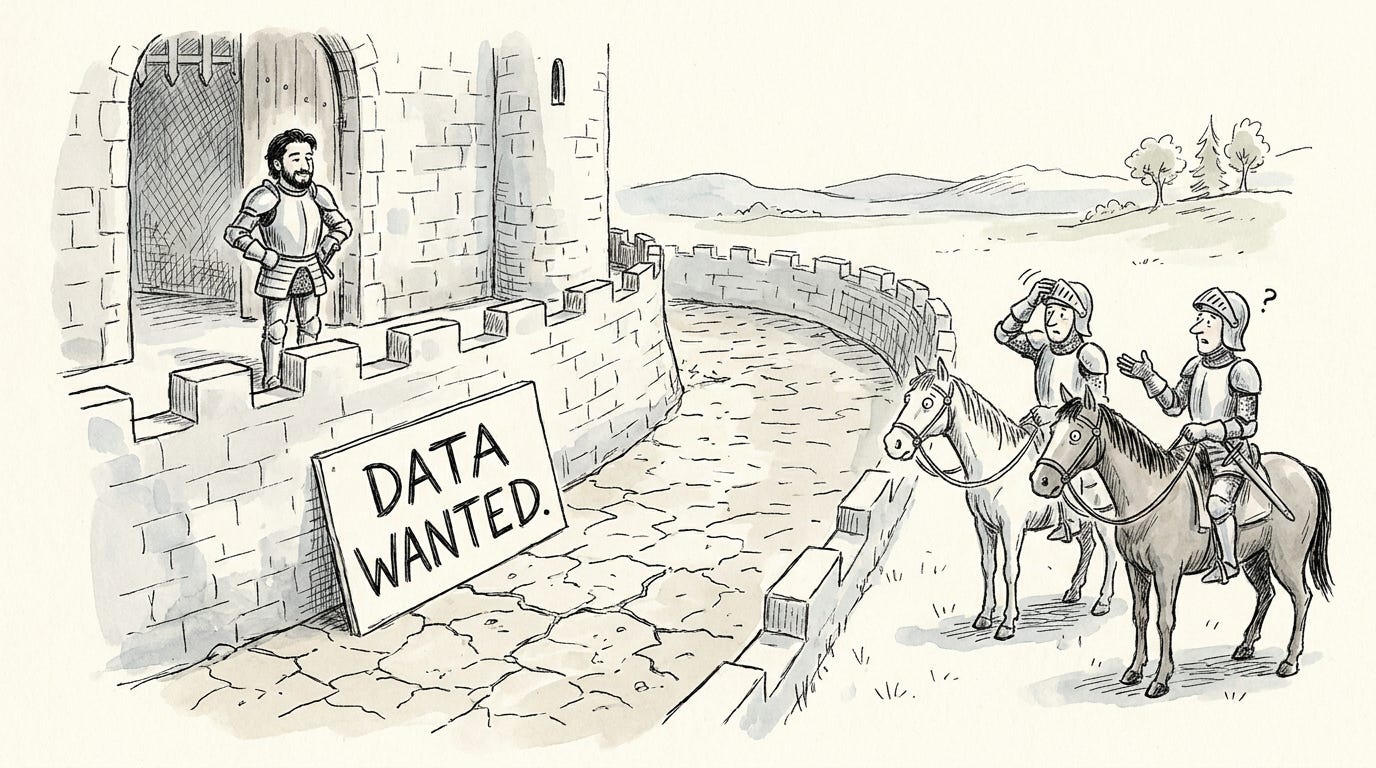
We spent a chunk of the episode on whether data moats in vertical AI are real or a story founders tell investors. Yoni is more skeptical than most.
His argument: “We all have access to the same API keys.” Post-training and fine-tuning within a domain is a product with a short shelf life because foundation models are coming for that work directly. He points to Jasper AI, which had early access to OpenAI’s API and built a copywriting product on better prompts. “I don’t think Jasper exists anymore. And it’s kind of laughable that it would.”
I pushed back. If the data is truly proprietary (manufacturing processes, decade-long booking histories, internal operational data that no model lab will ever buy), it compounds. A vertical AI company embedded in a customer’s workflow accumulates context that an outsider can’t replicate with a better prompt.
Yoni’s counter: “The person that has it doesn’t own it. The customer owns it. So why would the margin accrue to me instead of to them?” If the proprietary data lives inside the customer’s systems and you’re extracting and processing it on their behalf, you’re describing an IT services company.
The productive tension landed on a distinction between what flows through the process and what the process itself becomes. Yoni’s view: “Process and product are distinct. Until they’re not.” If you can productize the process, not just the output, that’s where durable value lives. He drew an analogy to Bain, BCG, and McKinsey. They weren’t technology companies in any conventional sense, but they pioneered a technology, scientific management, and productized it at scale. The post-war management consultancies didn’t sell deliverables. They sold a way of operating.
Whether that is a moat in the traditional sense (earned data, switching costs, platform lock-in) is the open question. Yoni’s burden-of-proof standard is useful regardless of where you land: “I think the burden of proof is on you for why there’s a moat and terminal margin. Not on me to demonstrate that there isn’t.”
The Takeaway for Vertical Founders
The SaaS income statement is deteriorating on every line. Gross margins compress with inference cost. LTV shrinks as switching costs drop, because agents use software instead of people, and swapping API calls is easier than retraining a team. R&D amortization windows shorten because competitive pressure accelerates. None of this means software companies are worse. It means they’re different.
The question for vertical AI founders is which of these five shapes your company is actually becoming. Are you owning outcomes through FDE? Building a neo-firm that uses software to differentiate a service? Acquiring an operating business and doing a full AI-driven overhaul? Constructing an agent network where single-player utility funds the cold-start problem? Or differentiating through hardware?
“SaaS with AI features” is not on the list. Reselling tokens with a better prompt is not on the list. If your moat story starts and ends with “we have better evals,” you’re one foundation model or model lab harness update away from irrelevance.
The margins are a bit lower, market opportunity is much larger, and — despite the ongoing hype — blue oceans abound for those willing to build something truly differentiated.
See you next week.
Key Moments from this Episode
00:00 — Why customers never really wanted software
06:27 — The 5 business models that could replace SaaS
12:03 — Why forward-deployed engineers are suddenly everywhere
16:40 — The massive opportunity hiding in SMB labor budgets
17:35 — How AI agents could create entirely new network effects
21:08 — Why AI could make software markets 30–100x bigger
24:46 — The problem with AI companies that just resell tokens
28:45 — Software vs. services: who actually owns the outcome?
33:37 — Why “better prompts” won’t become a lasting AI moat
38:05 — Is proprietary data really defensible anymore?
42:39 — Why the software vs. services distinction still matters
49:18 — The agent network business model explained
53:47 — What happens when AI agents start spending money?